The corporate AI market in 2026 is paradoxical: models are accessible, yet projects often fail for non-technical reasons (scoping, integration, governance). Here is a pragmatic purchasing method to choose a reliable AI consulting partner, whether a firm, freelancer, or agency.
March 18, 2026·8 min read
The "corporate" AI market has become paradoxical in 2026: models are more accessible than ever, but projects still often fail for non-technical reasons (poor scoping, nonexistent integration, ungoverned data, lack of measurement, GDPR risks, adoption). As a result, many decision-makers type "AIconsulting" hoping to find a partner capable of turning a promise into measurable gains.
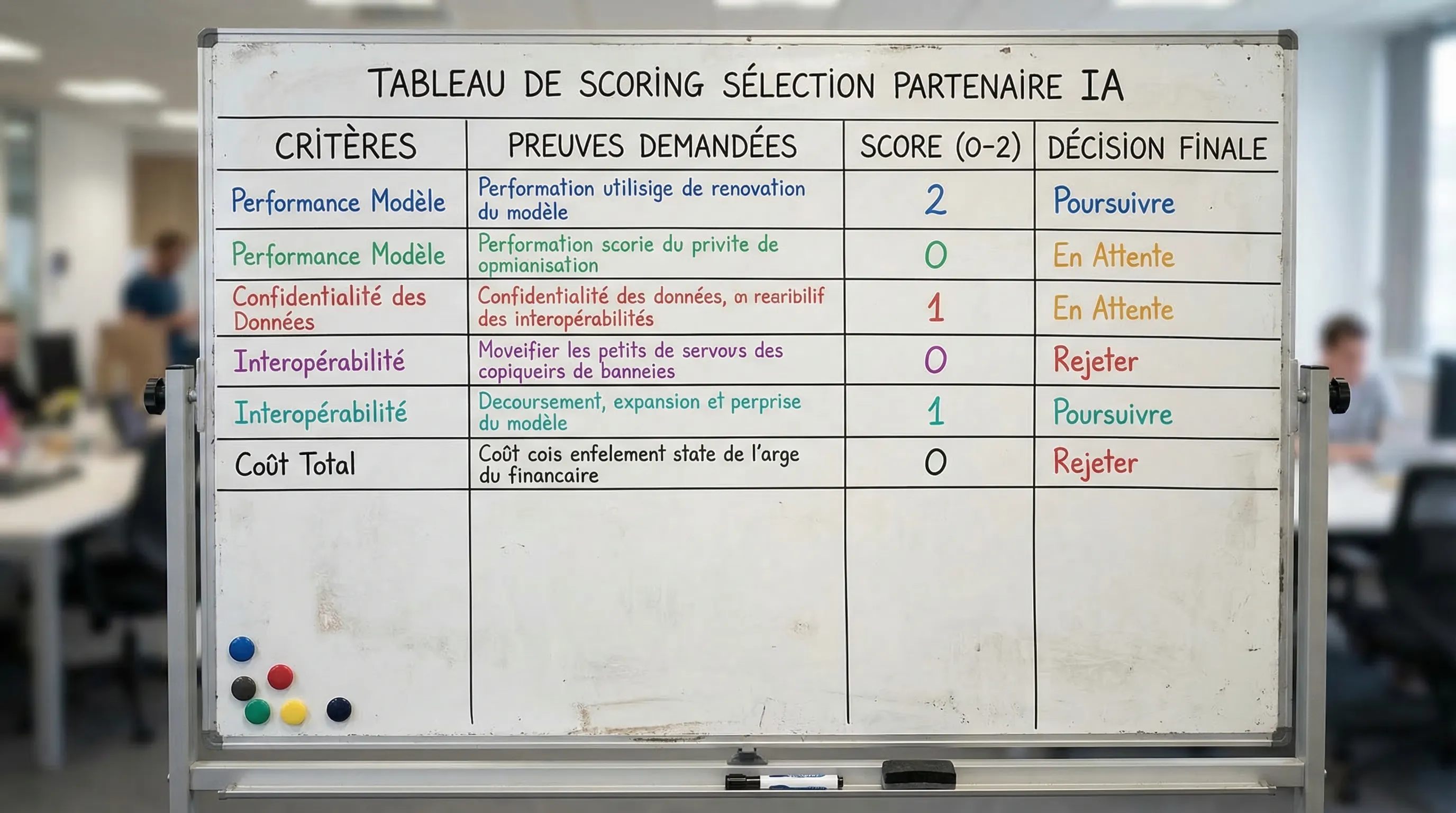
The goal of this article is simple: to give you a pragmatic purchasing method to choose a reliable partner, whether it be a consulting firm, a senior freelancer, or an agency capable of delivering and operating.
AI Consulting: What are we really talking about (and why it’s fuzzy)
"AIconsulting" covers several realities, and this is often the primary source of disappointment.
Strategic Consulting: Prioritizing use cases, building a roadmap, framing governance, aligning teams.
Technical/Product Consulting: Choosing an architecture (API, RAG, agents), defining a test protocol, steering an instrumented MVP.
Delivery and Integration: Developing, connecting to tools (CRM, helpdesk, ERP, SSO), securing, deploying.
A "reliable" partner is not necessarily one who does everything, but one who clearly announces what they do, what they don't do, and how they reduce risk.
The right partner depends on your stage (SME, scale-up, structuring)
Before comparing providers, clarify your context.
If you are an SME
You often need a partner who knows how to:
Choose 1 to 2 "cash-near" use cases (close to ROI)
Deliver an integrated V1 quickly (not a demo)
Frame data rules (GDPR, confidentiality)
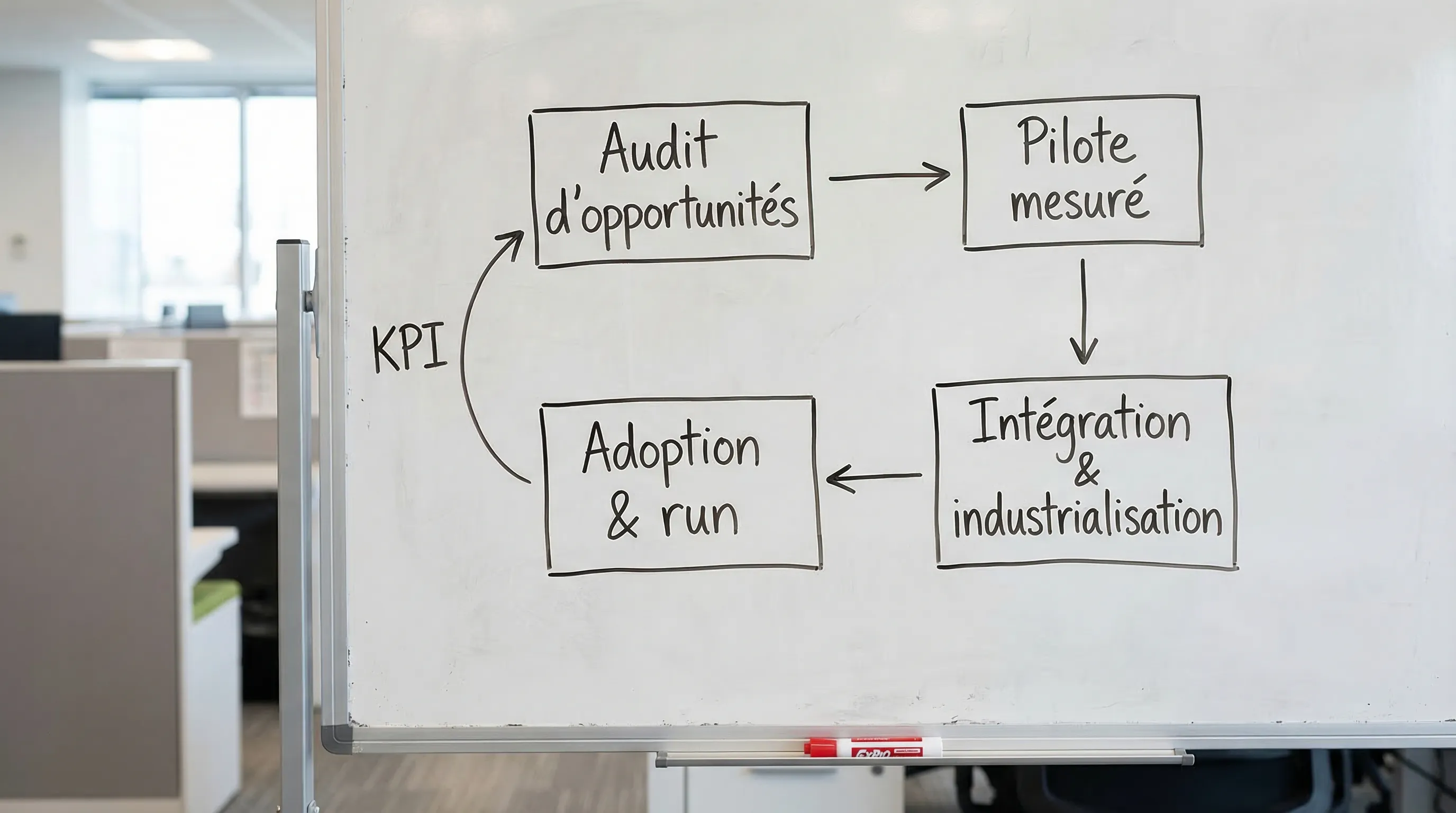
In this case, an approach like an opportunity audit followed by a measured pilot is generally the most rational (see for example a Strategic AI Audit).
Ask: "How do you validate quality before and after production?"
A reliable partner proposes a reproducible protocol (scenarios, acceptance criteria, logs), not an "eyeball" validation. Useful frameworks for buyers to know:
If your project touches sensitive decisions (finance, HR, compliance), add a requirement for traceability and proportionate human review.
Alert signals (red flags) to take seriously
Some signals almost always predict drift.
Promise of results without asking for your data, your processes, your constraints.
"Wow" demonstration impossible to reproduce on your real cases.
Refusal to address security, GDPR, the AI Act, or evasive answers.
Absence of a measurement plan, or KPIs added "later".
No reusable deliverables, only meetings and slides.
No discussion on operations (logs, monitoring, runbook).
What Impulse Lab does (if you are looking for a delivery-oriented partner)
Impulse Lab is an agency that supports SMEs and scale-ups in AI adoption with an approach oriented towards value, integration, and delivery.
Depending on your need, the team proposes:
AI opportunity audits to prioritize measurable use cases
Custom web and AI solution development (platforms, automations)
Integration with your existing tools
Training to accelerate adoption
If you want a low-risk first step, starting with a short scoping and an instrumented pilot is often the best option. You can also consult useful resources like:
To discuss your context and quickly verify if a topic is "pilotable" (KPI, data, integration, risks), you can start with a scoping exchange via impulselab.ai.